
Care Disclaimer: Plant care recommendations are general guidelines based on common growing conditions. Individual results may vary based on your local environment, climate, and care routine. If your plant is toxic, keep it away from children and pets, and consult a veterinarian if accidental ingestion occurs.
1.Zingiber Garden — Overview
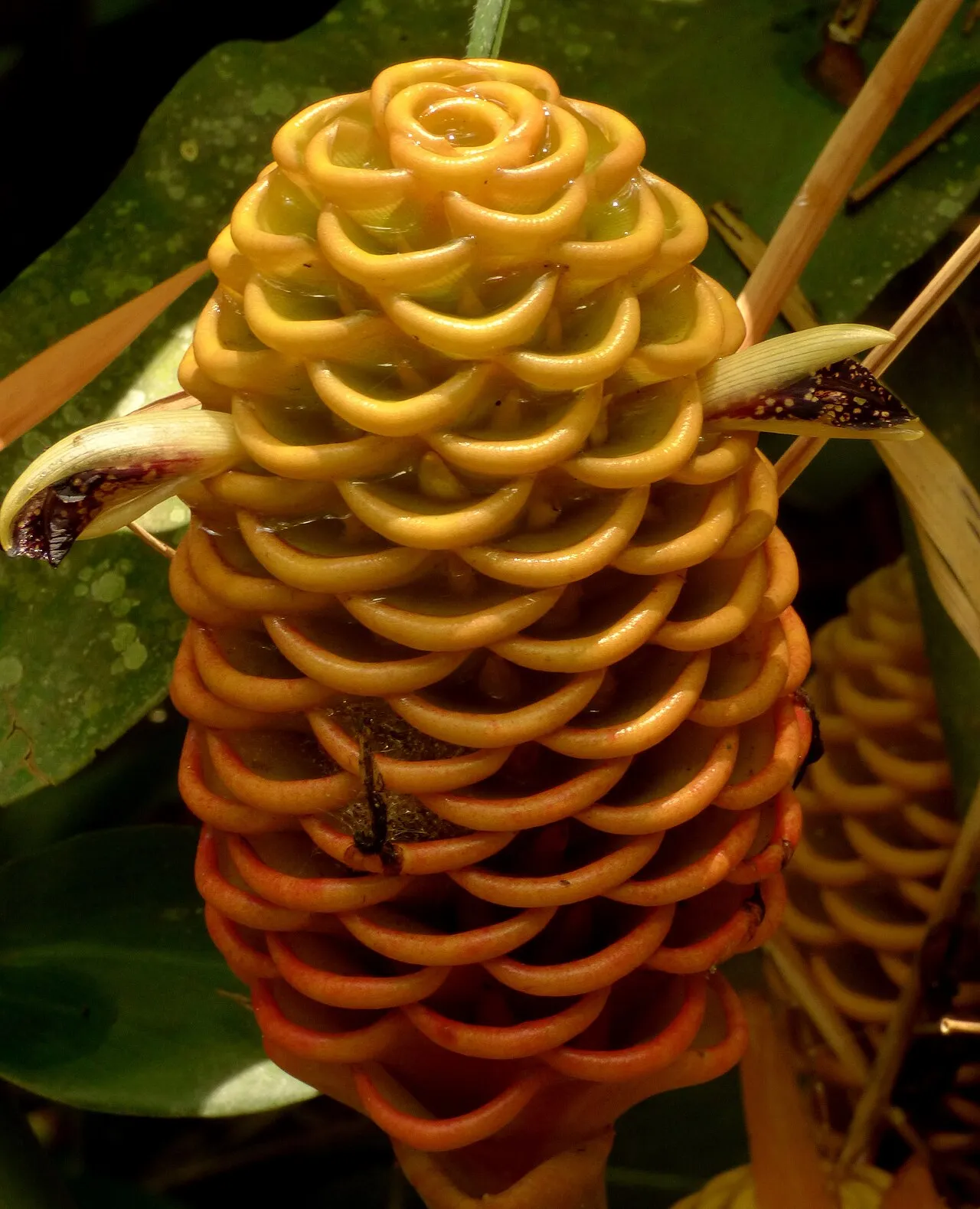
Zingiber spectabile, commonly known as 'Beehive Ginger' or 'Shampoo Ginger', is a captivating perennial herbaceous plant belonging to the Zingiberaceae family, the same botanical lineage as common culinary ginger. Native to the warm, humid rainforests of tropical Southeast Asia, particularly Malaysia and Thailand, this species is celebrated for its distinctive morphology and cultural significance. It typically grows to an impressive height of 1 to 2 meters, characterized by robust, upright stems adorned with large, lance-shaped, glossy green leaves arranged alternately.
The plant's most striking feature is its unique inflorescence, an erect, cone-like structure that strongly resembles a pine cone or a beehive. This 'cone' undergoes a fascinating color transformation, starting as a vibrant greenish-yellow and gradually maturing into shades of brilliant red or orange. Small, delicate yellow flowers emerge sequentially from within the overlapping bracts of this inflorescence.
Beyond its striking ornamental appeal, the aromatic and fleshy rhizomes of Beehive Ginger, along with the mucilaginous liquid collected from its mature inflorescence, have been integral to traditional medicinal practices and hair care rituals in its native regions. The plant thrives as an understory species, preferring filtered light and consistent moisture, conditions typical of its rainforest habitat.
Trusted Scientific References
1. Authoritative external sources for Zingiber spectabile
1.1 Wikipedia — Zingiber spectabile
1.2 Kew POWO (Plants of the World Online)
1.3 PubMed — peer-reviewed research
1.4 NCBI Taxonomy Browser
1.5 GBIF — Global Biodiversity
1.6Zingiber Garden should be interpreted through verified botanical identity, practical care, and responsible safety language. This recovery note adds the missing context needed for a complete profile: match light to the plant's habit, use well-drained soil, water according to season, and avoid unsupported medicinal or edible claims. For publishing, the plant can be presented as a source-backed garden plant with clear care guidance, common problem diagnosis, and conservative safety wording.
1.1.Zingiber Garden — Key Features
- ✓ <strong>Botanical Name</strong> — Zingiber spectabile
- ✓ <strong>Common Names</strong> — Beehive Ginger, Shampoo Ginger, Pinecone Ginger
- ✓ <strong>Family</strong> — Zingiberaceae
- ✓ <strong>Native Region</strong> — Tropical Southeast Asia (Malaysia, Thailand)
- ✓ <strong>Distinctive Inflorescence</strong> — Beehive/pinecone-shaped, color-changing from yellow-green to red-orange
- ✓ <strong>Medicinal Rhizomes</strong> — Used for various traditional remedies, including anti-inflammatory and digestive support
- ✓ <strong>Hair & Scalp Benefits</strong> — Liquid from inflorescence traditionally used as a natural shampoo and conditioner
- ✓ <strong>Chemical Profile</strong> — Rich in gingerols, shogaols, sesquiterpenes, flavonoids, and saponins
- ✓ <strong>Growth Habit</strong> — Perennial herbaceous plant, typically growing 1-2 meters tall
- ✓ <strong>Cultivation</strong> — Prefers warm, humid, partial shade conditions with rich, moist, well-drained soil.
1.2.Zingiber Garden — Quick Summary
- ✓ Exotic ornamental and medicinal plant native to tropical Southeast Asia.
- ✓ Renowned for its unique beehive-shaped inflorescence and aromatic rhizomes.
- ✓ Traditionally used for anti-inflammatory, antimicrobial, and digestive support.
- ✓ Inflorescence liquid serves as a natural hair and scalp conditioner and cleanser.
- ✓ Rich in gingerols, shogaols, and sesquiterpenes offering diverse health benefits.
- ✓ Requires warm, humid conditions and partial shade for optimal growth and vitality.
2.Zingiber Garden — Scientific Identity
3.Zingiber Garden — Quick Facts
4.Zingiber Garden — Appearance & Identification
5.Zingiber Garden — Native Habitat
6.Zingiber Garden — Water Requirements
- ✓ Climate Preference — Thrives in tropical and subtropical climates (USDA Zones 7-10), requiring warm temperatures and high humidity; protect from frost.
- ✓ Light Requirements — Prefers partial shade, mimicking its natural understory habitat in rainforests; direct, intense sunlight can scorch the leaves.
- ✓ Soil Composition — Requires organically rich, consistently moist, and well-draining soil with a neutral to slightly acidic pH for optimal growth.
- ✓ Watering Schedule — Water frequently and deeply during the active growing season, ensuring the soil remains moist but never waterlogged to prevent root rot.
- ✓ Fertilization — Benefits from regular feeding every other month with a balanced, slow-release granular fertilizer or generous applications of organic compost during the growing season.
- ✓ Propagation — Easily propagated by dividing the rhizomes; ensure each section has at least one 'eye' or growth bud for successful establishment.
- ✓ Container Growing — Ideal for cooler climates; plant in large, heavy pots to accommodate its vigorous rhizome growth and bring indoors during winter.
- ✓ Pruning — Remove spent flower stalks at the ground level after blooming and prune any dead or damaged canes throughout the year to encourage healthy new growth.
Reviewed by the Flora Medical Global Botanical Review Panel
Multi-disciplinary editorial group · Botany · Ethnobotany · Herbal-medicine literature
Who reviewed this: This page was checked by the Flora Medical Global Botanical Review Panel — an in-house editorial group of botany graduates, ethnobotany researchers, and horticulture practitioners who collectively maintain our 7,000+ plant encyclopedia. Meet the team.
Our 4-step verification process
1. Taxonomic verification
Scientific names and synonyms cross-checked against Kew POWO, World Flora Online, and The Plant List.
2. Phytochemical & medicinal cross-reference
Active compounds, traditional uses, and reported activities are cross-referenced with PubMed, USDA Dr. Duke's database, and peer-reviewed ethnobotanical literature.
3. Conservation & distribution check
Distribution, ecology, and conservation status confirmed against GBIF occurrence records and the IUCN Red List.
4. Editorial & safety review
Every entry passes an editorial pass for clarity, originality, and safety notices (toxicity, contraindications, dosage caveats) before publication.
Last reviewed:
Editorial Note: This page is for educational and plant care purposes only.
Written by: Flora Medical Global Editorial Team
Reviewed by: Flora Medical Global Botanical Review Panel
Last Updated: June 15, 2026







Zingiber Garden — Comments & Community Reviews
Rate this plant